How to Store Lyophilized Peptides
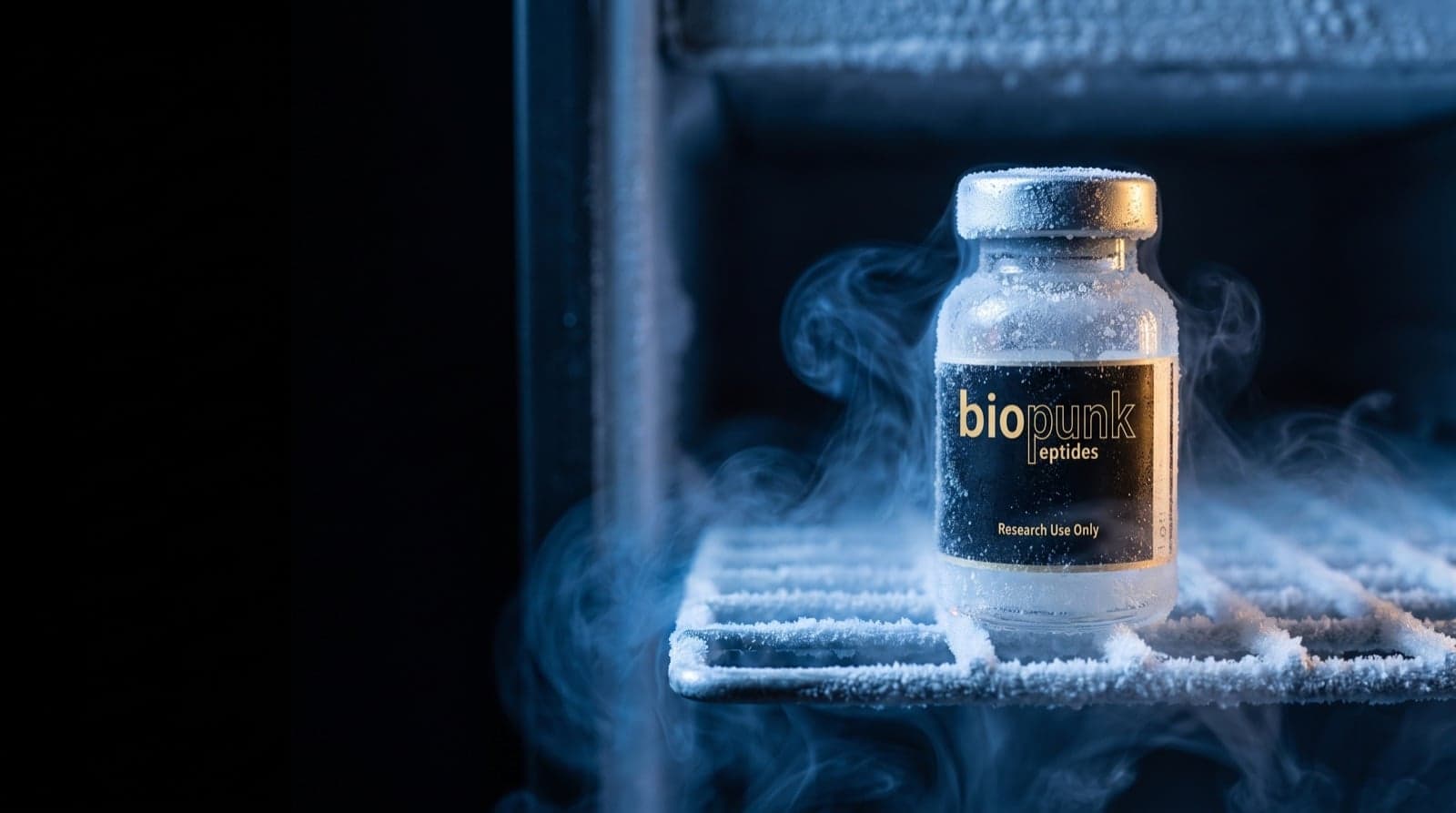
A lyophilized peptide is a peptide that has been freeze-dried. The water is taken out, and what’s left is a dry powder or a small solid cake at the bottom of the vial. The dryness is the whole point: without water, the peptide is far more stable than it would be in solution, so it keeps much longer.
It still needs looking after. Heat, light, moisture and air all work against a dry peptide over time, and good lyophilized peptide storage is mostly about keeping those four away. If you’ve been wondering how to store peptides that arrive as dry vials, this is the whole picture.
This guide covers dry, lyophilized vials only. It doesn’t cover peptides in solution.
Peptide storage temperature: the short version
| Where | Temperature | When |
|---|---|---|
| Fridge | 2 to 8 °C | When the vial arrives, and for short-term storage |
| Freezer | -20 °C or colder | Long-term storage |
| Room temperature | around 20 to 25 °C | Not for storage |
Wherever the vial ends up, keep it dry, tightly capped and out of bright light.
Fridge or freezer?
What temperature to store lyophilized peptides at mostly comes down to how long you’ll keep them. Put the vial in the fridge when it arrives. That’s what our FAQ recommends, and it’s the right first step. Bachem also notes that, for short-term use, lyophilized peptides may be kept in a refrigerator at 4 °C.
If you plan to keep a vial for a long time, the freezer is the better place. Peptide manufacturers such as GenScript recommend storing lyophilized peptides at -20 °C, away from bright light. Under those conditions, GenScript says most lyophilized peptides stay stable for several years.
One thing to avoid is moving a vial back and forth between the freezer and the bench. Peptides that are frozen and thawed again and again are more likely to degrade. Pick a spot, and leave the vial there.
Why moisture matters
Some amino acids pull water out of the air. GenScript lists aspartic acid (Asp), glutamic acid (Glu), lysine (Lys), arginine (Arg) and histidine (His). A peptide that contains them can take on moisture, and moisture is exactly what freeze-drying removed in the first place.
So keep the cap tight. For peptides with these residues, GenScript recommends a desiccator, which is a sealed container that keeps the air around the vial dry.
Oxygen and oxidation
Other amino acids react with oxygen. Peptides that contain cysteine (Cys), methionine (Met) or tryptophan (Trp) are prone to oxidation. GenScript recommends storing them under anaerobic conditions, meaning with as little oxygen as possible.
In practice, that means less air getting to the peptide. Keep the vial sealed, and don’t open it more often than you have to.
Light
Bright light is the last one. A dark fridge or freezer already takes care of it. Anywhere else, keep the vial somewhere dark, like a closed box or a drawer.
Every peptide is different
No single rule fits every peptide, including the ones in our catalog. BPC-157 and GHK-Cu, for example, both come as dry vials, and the same basics apply to both. How stable a peptide is depends on its sequence, and which amino acids it contains decides which of the risks above matters most. When a vial comes with specific storage conditions on its label or its Certificate of Analysis, follow those.
Common questions
How should lyophilized peptides be stored?
Cold, dry, sealed and out of bright light. That covers most of it.
What temperature should lyophilized peptides be stored at?
2 to 8 °C in the fridge for the short term. -20 °C or colder for long-term storage, which is what peptide manufacturers such as GenScript recommend.
Do lyophilized peptides need to be refrigerated?
Yes. Refrigerate on arrival, and move the vial to the freezer if you plan to keep it for a long time.
Can lyophilized peptides be stored at room temperature?
Room temperature isn’t a storage condition for a dry peptide. Keep it in the fridge, or the freezer for the long term.
Can lyophilized peptides be frozen?
Yes. -20 °C is the standard long-term condition. The thing to avoid is repeated freezing and thawing, which makes degradation more likely, so don’t keep moving the vial in and out of the freezer.
Does this apply to peptides in solution?
No. This guide is only about dry, lyophilized vials, and it doesn’t cover peptides in solution.
For Research Use Only. Not for use in diagnostic procedures. All Biopunk Peptides products are for laboratory research use only. They are not for human or animal consumption.
Related posts
Do Peptides Expire? The Shelf Life of Lyophilized Peptides
Yes, peptides degrade over time. Here’s what decides the shelf life of a dry, lyophilized peptide, and how to read the dates on a vial.
What Does “Research Use Only” Mean on Peptides?
What the Research Use Only label on a peptide means, what research use covers, what it rules out, and why we don’t answer some questions.
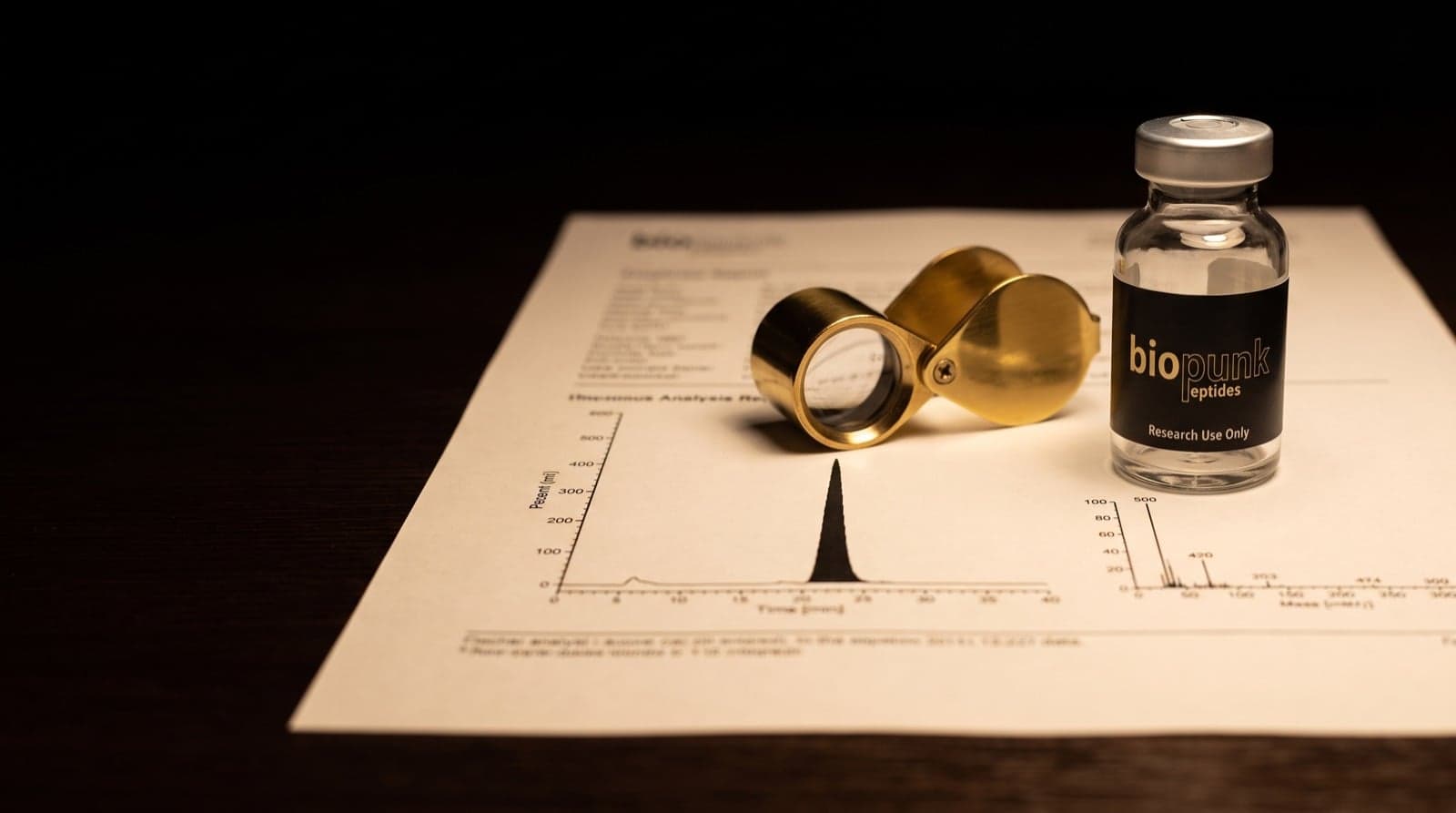
How to Read a Peptide Certificate of Analysis (COA)
How to read a peptide certificate of analysis: what HPLC purity measures, what mass spec confirms, and why purity isn’t peptide content.