Do Peptides Expire? The Shelf Life of Lyophilized Peptides
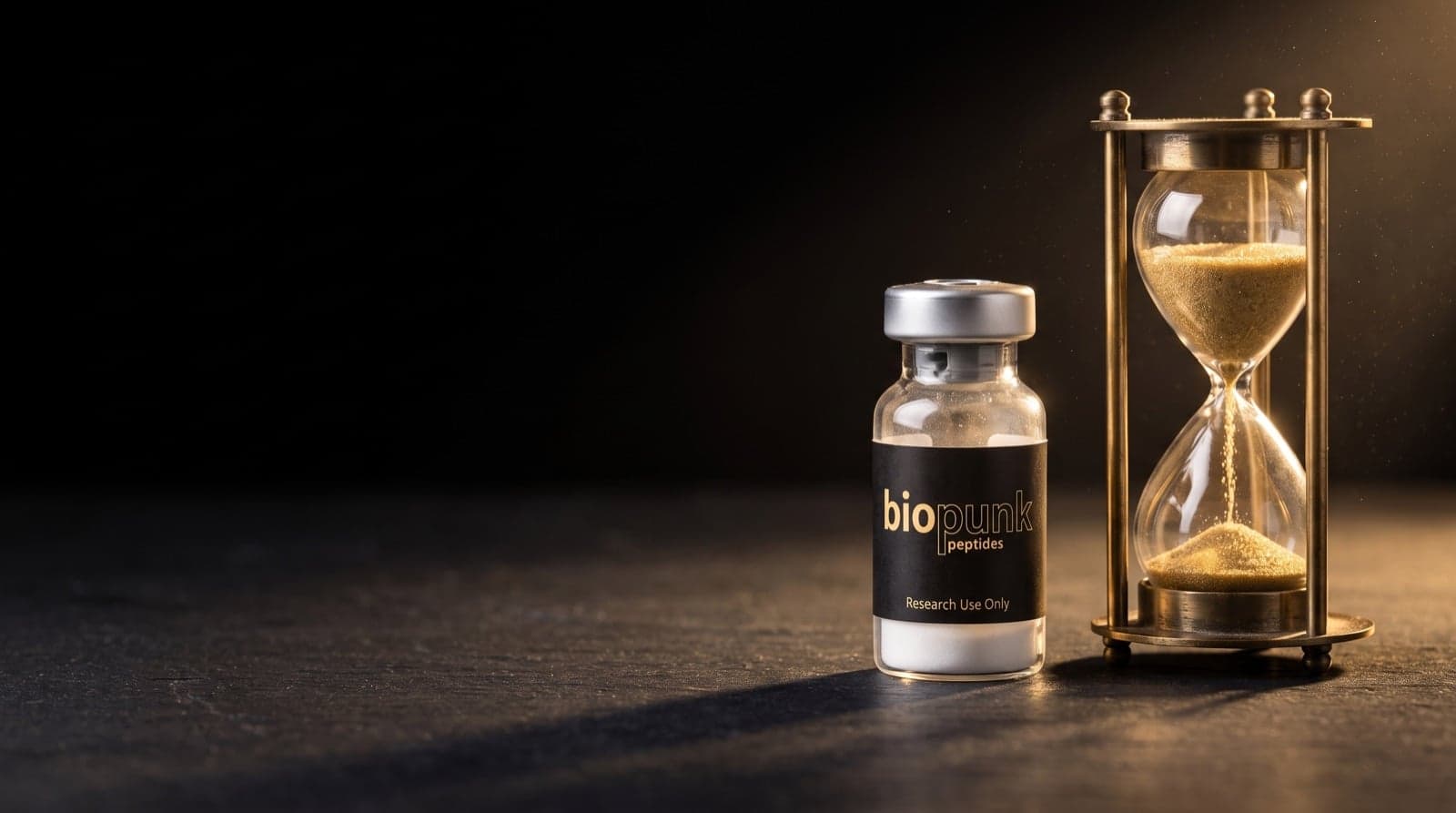
Short answer: yes. Peptides don’t last forever. A dry, lyophilized peptide lasts a long time if it’s stored well, but it still breaks down slowly, and some sequences break down faster than others.
This article is about dry peptides in sealed vials. It doesn’t cover peptides in solution.
Why dry peptides last longer
Freeze-drying takes the water out of a peptide. That matters, because water is involved in a lot of the chemistry that breaks peptides down. GenScript puts it plainly: the shelf life of peptides in solution is very limited, much shorter than that of lyophilized peptides.
So the dry vial is the stable form, and the real question is how long it stays that way.
How long is peptide shelf life?
There isn’t one number for every peptide. Stability depends on the sequence.
What the manufacturers do say is this. GenScript reports that most lyophilized peptides stored at -20 °C, away from bright light, stay stable for several years. Bachem recommends keeping lyophilized peptides in a tightly closed container below -15 °C, and colder still for long-term storage.
Those are best-case figures, and they depend on storage. If you haven’t read it yet, our guide on how to store lyophilized peptides covers the fridge, the freezer and the rest.
What shortens lyophilized peptide stability
The sequence comes first. Bachem notes that peptides containing asparagine (Asn), glutamine (Gln), methionine (Met), cysteine (Cys) or tryptophan (Trp) have limited shelf lives, and Met, Cys and Trp are also prone to oxidation. Oxygen drives that, which is why a sealed vial that isn’t opened more than it needs to be holds up better.
Moisture is the other big one. Peptides tend to be hygroscopic, meaning they pick up water from the air, and according to Bachem absorbed moisture lowers the overall peptide content and can also decrease stability. A loose cap works against you.
Then there’s the storage itself. Warm, bright conditions speed degradation up, and GenScript notes that peptides which are frozen and thawed again and again are more likely to degrade.
How long do peptides last out of the fridge?
There’s no reliable single answer, and anyone who gives you an exact number for every peptide is guessing.
What we do know is that Bachem notes lyophilized peptides may be shipped at room temperature. So the dry powder handles the trip, but room temperature still isn’t where it should be kept. Once a vial arrives, it goes in the fridge, and in the freezer if you’re keeping it for a while.
How are lyophilized peptides shipped?
Usually as a dry powder in a sealed vial. That’s the form peptide manufacturers deliver in. GenScript, for example, delivers all of its peptides lyophilized, and Bachem notes they may be shipped at room temperature.
Reading the dates on a vial
Two things on a label matter here. The first is the batch number. Every vial in our catalog is assigned a Biopunk batch number when it comes in, so it can be traced back to the exact shipment it came from.
The second is the expiration date, which is printed on the label when the manufacturer provides one. Some suppliers put an expiration on the vial and some don’t. There’s more on both in our FAQ.
When a vial has an expiration date or specific storage conditions on its label, follow those over any general guidance, including this article.
Can you tell if a peptide has degraded by looking at it?
Not reliably. Appearance doesn’t tell you much about purity. That takes analytical testing, the kind you see summarized on a Certificate of Analysis.
Common questions
Do peptides expire?
Yes. Lyophilized peptides are stable for a long time when they’re stored well, but they still degrade gradually.
What is the shelf life of a lyophilized peptide?
It depends on the sequence. GenScript reports that most lyophilized peptides stay stable for several years at -20 °C, away from bright light.
Which peptides have a shorter shelf life?
Bachem lists peptides containing Asn, Gln, Met, Cys or Trp as having limited shelf lives.
Does this apply to peptides in solution?
No. This article is only about dry, lyophilized vials, and it doesn’t cover peptides in solution.
For Research Use Only. Not for use in diagnostic procedures. All Biopunk Peptides products are for laboratory research use only. They are not for human or animal consumption.
Related posts
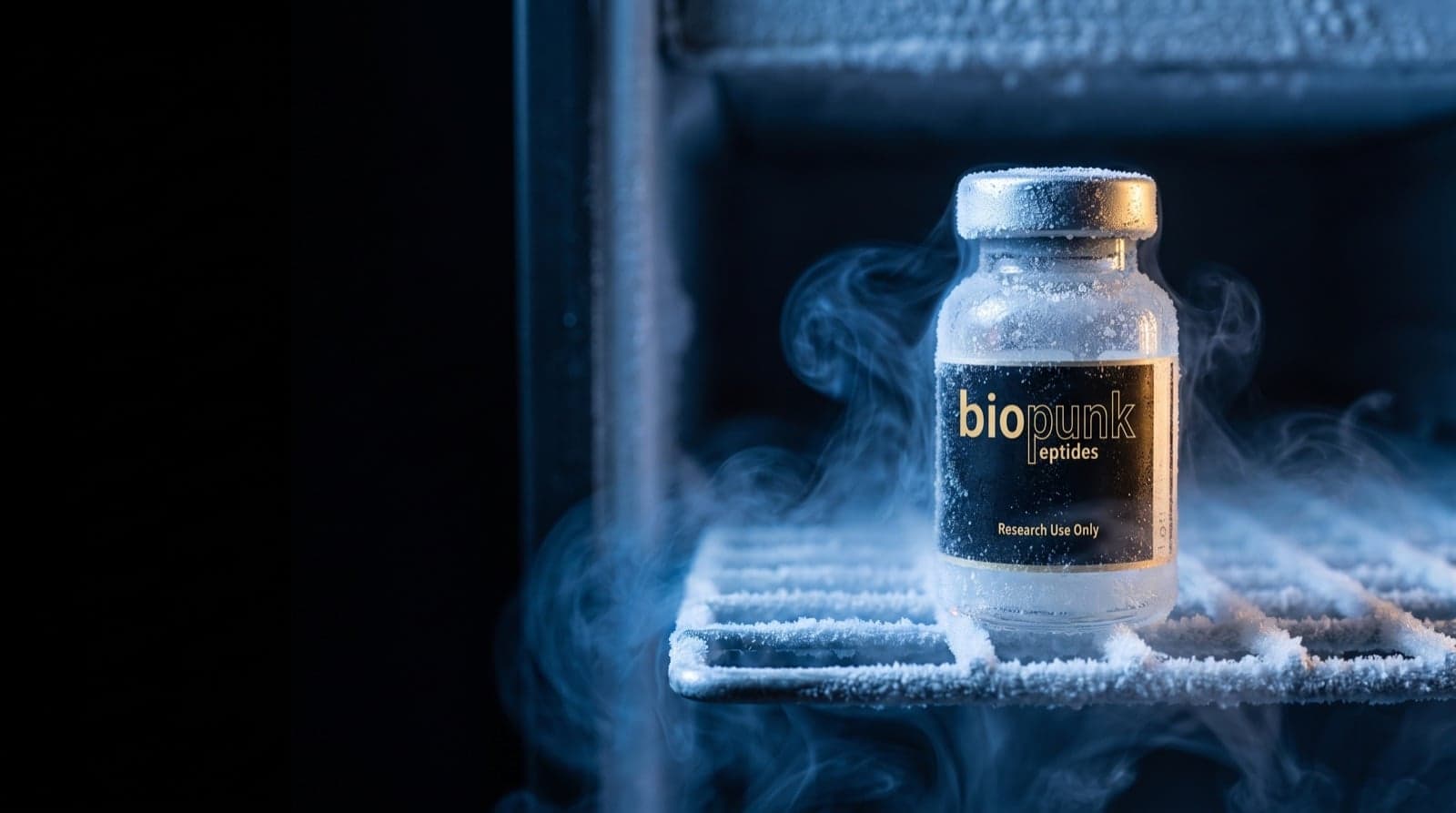
How to Store Lyophilized Peptides
Fridge, freezer or room temperature? A plain guide to storing dry, lyophilized research peptides, and why light, moisture and air matter.
What Does “Research Use Only” Mean on Peptides?
What the Research Use Only label on a peptide means, what research use covers, what it rules out, and why we don’t answer some questions.
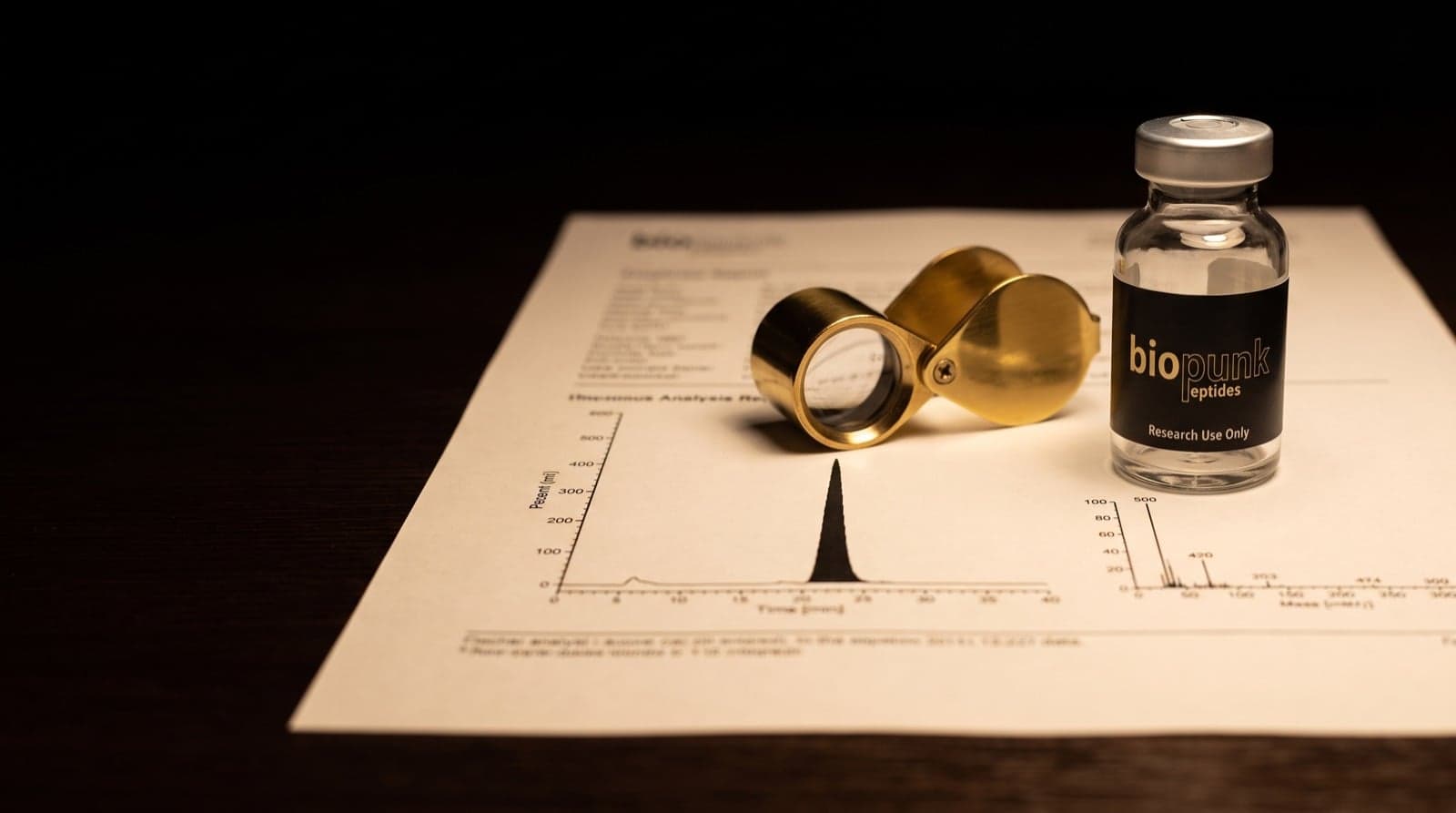
How to Read a Peptide Certificate of Analysis (COA)
How to read a peptide certificate of analysis: what HPLC purity measures, what mass spec confirms, and why purity isn’t peptide content.