OVAGE
RUO
20mg
pep-OVA-20mg-us
Ovagen
$75.34Out of stock
Biopunk supplies research-grade compounds for laboratory research. Our products are not for human or animal consumption and are not intended to diagnose, treat, cure, or prevent any disease.
Loading product…
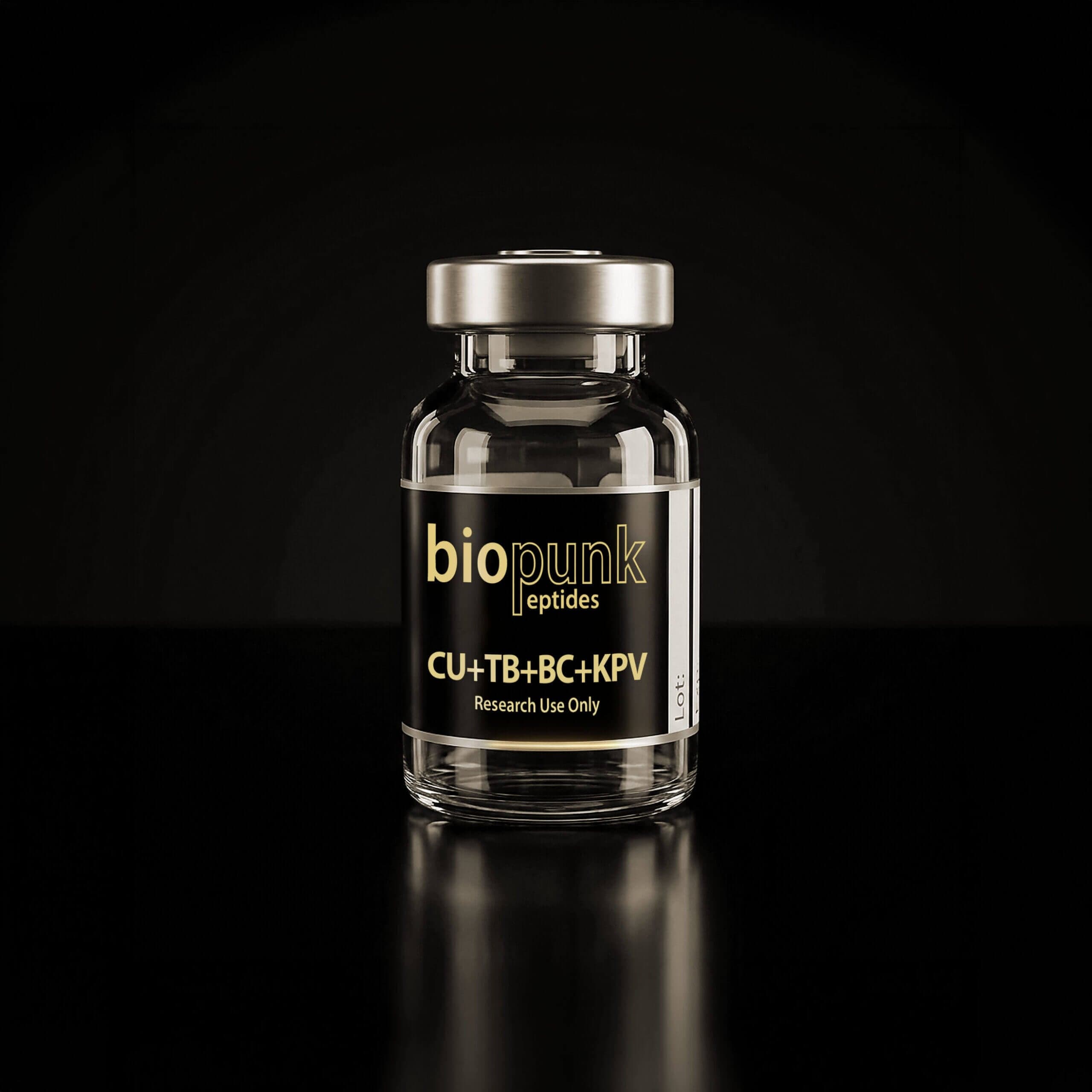
pep-KLOW
KLOW combines four research peptides in one vial: GHK-Cu, TB-500, BPC-157, and KPV. Each has been separately studied — GHK-Cu for copper-dependent matrix chemistry (Pickart et al., 2008, PMID 18644225), TB-500 for actin-binding chemistry, BPC-157 for angiogenic signaling, and KPV for anti-inflammatory pathway research. Lyophilized powder, research-grade. For Research Use Only. Not for human consumption.
Manufactured in · 2 sources
| Strength | USA | China |
|---|---|---|
| 80mg | $155.64Out of stockView | $141.49In stockView |
For laboratory research use only · Not for human or veterinary use.
Description
KLOW combines four peptides studied across separate but overlapping areas of cellular research: GHK-Cu (50mg), a copper-binding tripeptide studied for its role in extracellular matrix protein synthesis; TB-500 (10mg), a synthetic fragment of thymosin beta-4 studied for its actin-binding chemistry; BPC-157 (10mg), a synthetic pentadecapeptide derived from a sequence identified in gastric juice, studied for its angiogenic signaling; and KPV (10mg), a tripeptide fragment studied for its interaction with inflammatory pathways in cell and animal models. Each compound is manufactured and verified independently before being combined into the blend.
Pickart et al. (2008, 2012) characterized GHK-Cu's copper-binding chemistry and its documented role in extracellular matrix protein synthesis and remodeling processes across multiple research models. Irobi et al. (2004) and Sosne et al. (2010) documented the actin-binding chemistry of thymosin beta-4, the protein TB-500 is derived from, including the specific short sequence responsible for its actin-sequestering activity. Brcic et al. (2009) investigated BPC-157's angiogenic signaling in animal models, documenting VEGF-associated changes observed in tissue-repair research. Sikiric et al. (2026) reviewed BPC-157's cytoprotection chemistry, including endothelial-integrity and nitric-oxide-system observations relevant to the hemorrhage-thrombosis paradox. Zhang et al. (2024) and Marotti et al. (2023) studied KPV's anti-inflammatory chemistry, including its self-assembly into nanoparticle carriers and its use in immunomodulation research.
For Research Use Only. Not for human consumption.
Specifications
Lab reports
We independently test selected batches and publish those reports. Not every batch has one, and this strength and origin does not have a published report right now. You can read how certificates of analysis work, or browse every report we have published.
Shipping & Storage
Shipping
Orders ship within 24 hours. Delivered via USPS Priority or standard FedEx unless expedited shipping is selected at checkout. Tracking is emailed on dispatch and mirrored in your account.
In-transit handling
Lyophilized vials are shelf-stable and ship at ambient temperature. Storage in our warehouse is cooled; shipment does not require refrigeration.
Long-term storage
Lyophilized vials are shelf-stable at ambient temperature; refrigeration (2–8°C) extends shelf life. Where a published Certificate of Analysis exists for your strength and origin, it is on the COA tab. Not for human or animal consumption.
Returns
Because these are research-grade biologics, we cannot accept returns on opened vials. Damaged-in-transit shipments are replaced at no cost within 7 days of delivery.
Frequently asked
We independently test selected batches at a third-party lab and publish those certificates of analysis. Not every batch has one. The COA tab on each product shows whether the strength and origin you picked has a published report.
Related