OVAGE
RUO
20mg
pep-OVA-20mg-us
Ovagen
$75.34Out of stock
Biopunk supplies research-grade compounds for laboratory research. Our products are not for human or animal consumption and are not intended to diagnose, treat, cure, or prevent any disease.
Loading product…
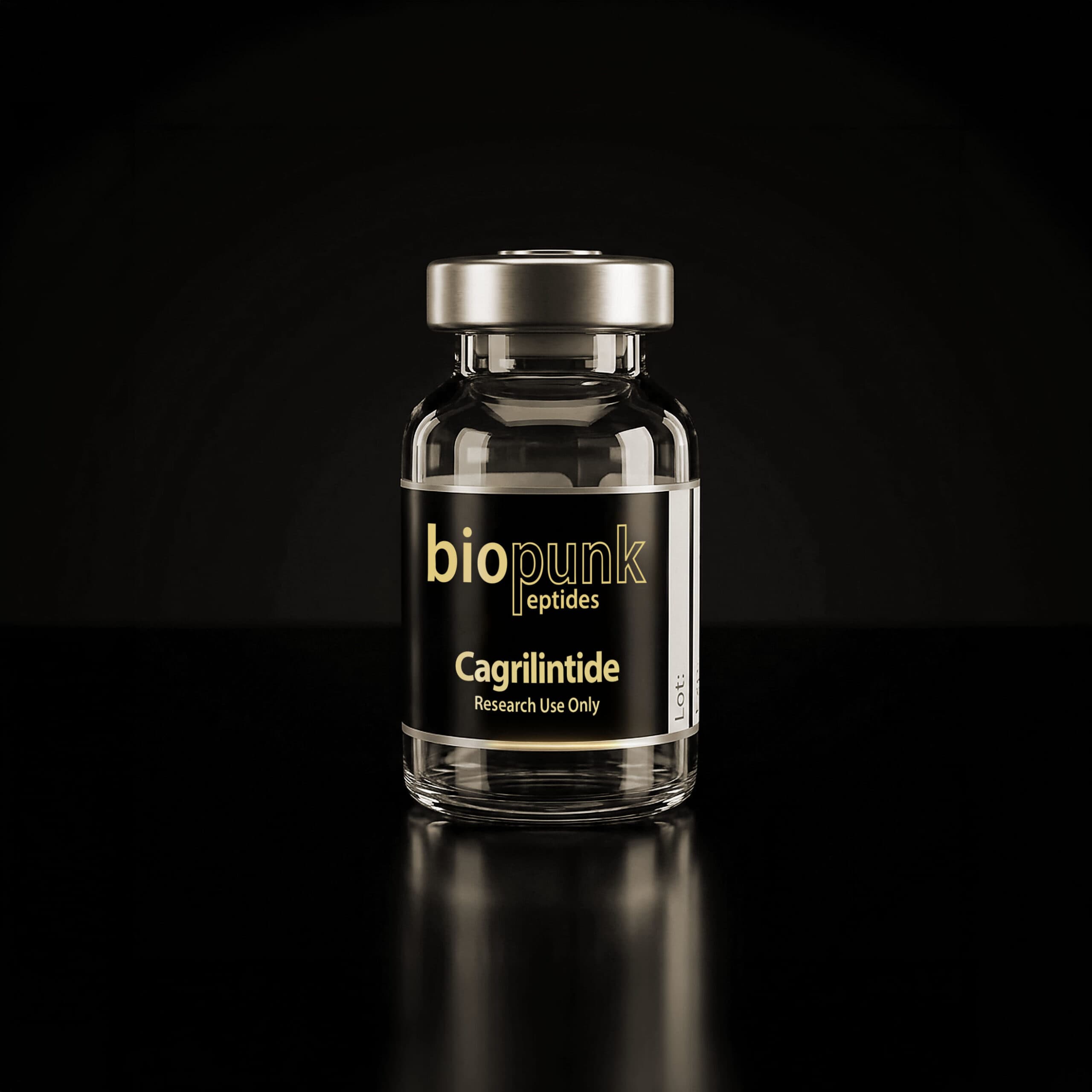
pep-CAG
CAG is a long-acting amylin analogue characterized in the literature as a dual amylin and calcitonin receptor agonist (DACRA), engaging receptor populations in the area postrema. Larsen et al. (Biomedicine & Pharmacotherapy, 2022; PMID 36242844) compared its receptor-activation profile to a second DACRA molecule in preclinical rodent models. For Research Use Only. Not for human consumption.
Strength · 4 variants
Manufactured in · 2 sources
| Strength | USA | China |
|---|---|---|
| 2mg | $28.59Out of stockView | $25.99Out of stockView |
| 5mg | $84.14Out of stockView | $76.49Out of stockView |
| 10mg | $141.34Out of stockView | $128.49Out of stockView |
| 20mg | $188.09Out of stockView | $170.99Out of stockView |
For laboratory research use only · Not for human or veterinary use.
Description
CAG is a synthetic analogue of amylin, a pancreatic peptide hormone, chemically modified with a fatty-acid moiety for extended plasma exposure. It has been characterized in the literature as a dual amylin and calcitonin receptor agonist (DACRA), engaging receptor populations in the area postrema. The way a key can turn more than one type of lock, CAG is described in research as activating both the amylin and calcitonin receptor pathways, distinguishing it from single-receptor amylin analogues studied in earlier research.
Mathiesen et al. (Current Opinion in Endocrinology, Diabetes and Obesity, 2022; PMID 35066542) reviewed the mechanism of long-acting amylin receptor analogues, describing activity at calcitonin and amylin receptors in the area postrema as the proposed basis of their research-model effects on energy homeostasis. Larsen et al. (Biomedicine & Pharmacotherapy, 2022; PMID 36242844) compared CAG to a second DACRA molecule in high-fat-diet and Zucker diabetic fatty rat models, documenting receptor-activation profiles and associated body-weight and glucose-homeostasis parameters in vivo. Lau et al. (Lancet, 2021; PMID 34798060) conducted a multicentre, randomized, placebo- and active-controlled phase 2 trial examining a range of once-weekly CAG levels (0.3–4.5 mg) in adults with overweight or obesity, reporting bodyweight and safety outcomes over a 26-week treatment period.
For Research Use Only. Not for human consumption.
Specifications
Lab reports
We independently test selected batches and publish those reports. Not every batch has one, and this strength and origin does not have a published report right now. You can read how certificates of analysis work, or browse every report we have published.
Shipping & Storage
Shipping
Orders ship within 24 hours. Delivered via USPS Priority or standard FedEx unless expedited shipping is selected at checkout. Tracking is emailed on dispatch and mirrored in your account.
In-transit handling
Lyophilized vials are shelf-stable and ship at ambient temperature. Storage in our warehouse is cooled; shipment does not require refrigeration.
Long-term storage
Lyophilized vials are shelf-stable at ambient temperature; refrigeration (2–8°C) extends shelf life. Where a published Certificate of Analysis exists for your strength and origin, it is on the COA tab. Not for human or animal consumption.
Returns
Because these are research-grade biologics, we cannot accept returns on opened vials. Damaged-in-transit shipments are replaced at no cost within 7 days of delivery.
Frequently asked
We independently test selected batches at a third-party lab and publish those certificates of analysis. Not every batch has one. The COA tab on each product shows whether the strength and origin you picked has a published report.
Related