OVAGE
RUO
20mg
pep-OVA-20mg-us
Ovagen
$75.34Out of stock
Biopunk supplies research-grade compounds for laboratory research. Our products are not for human or animal consumption and are not intended to diagnose, treat, cure, or prevent any disease.
Loading product…
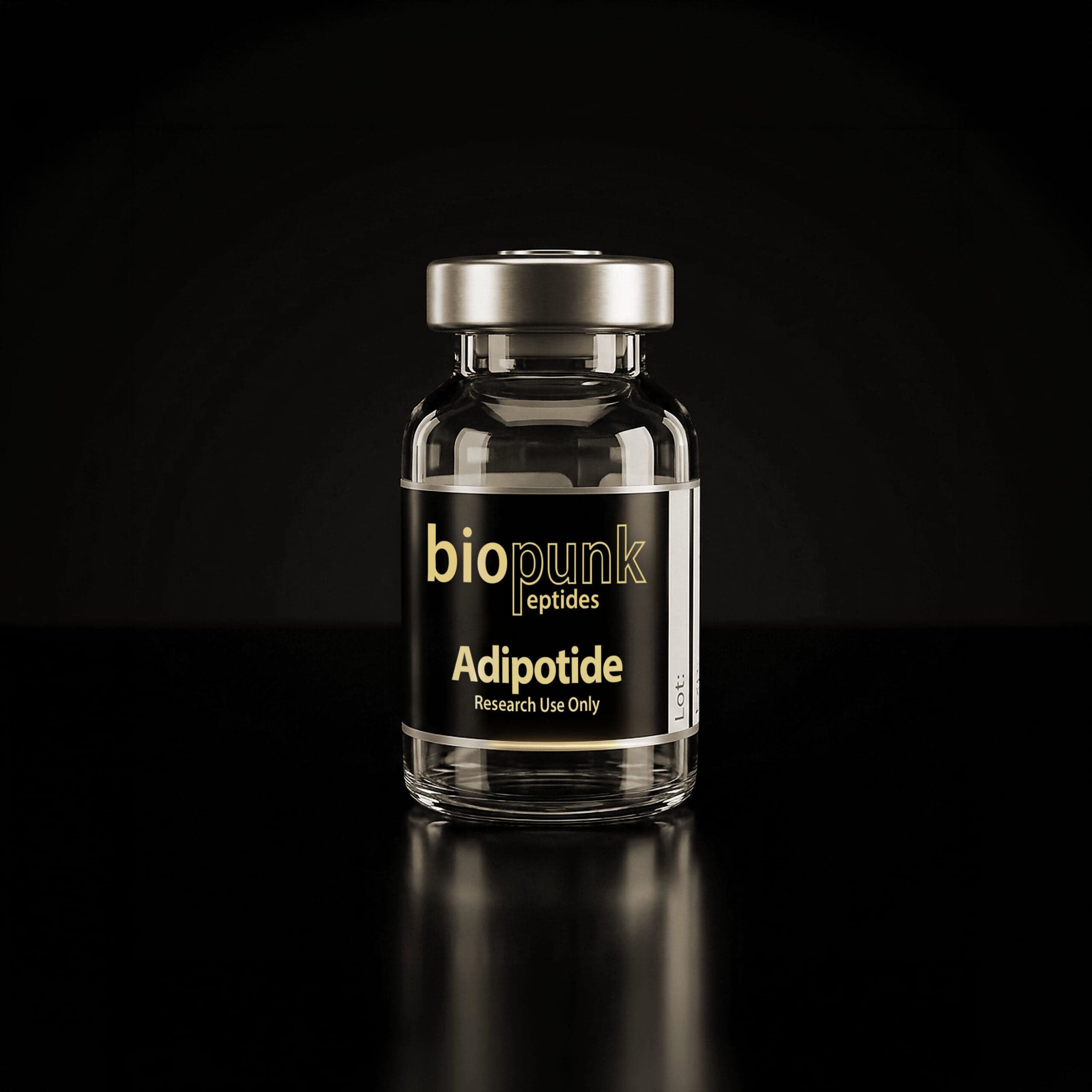
pep-ADP
Adipotide (CKGGRAKDC-GG-D(KLAKLAK)2) is a synthetic peptidomimetic documented in primary literature as a ligand that targets prohibitin on white-adipose-tissue vasculature, directing an attached proapoptotic sequence to that tissue compartment (Kolonin et al., Nat Med, 2004; PMID 15133506). Research-grade material, supplier-vetted supply. For Research Use Only. Not for human consumption.
Strength · 3 variants
Manufactured in · 2 sources
| Strength | USA | China |
|---|---|---|
| 2mg | $67.09Out of stockView | $60.99Out of stockView |
| 5mg | $141.89Out of stockView | $128.99Out of stockView |
| 10mg | $211.74Out of stockView | $192.49Out of stockView |
For laboratory research use only · Not for human or veterinary use.
Description
Adipotide (CKGGRAKDC-GG-D(KLAKLAK)2) is a synthetic peptidomimetic that pairs a white-fat-homing peptide motif with a proapoptotic sequence. It has been documented in primary literature as a ligand that binds prohibitin, a membrane protein expressed on the vasculature of white adipose tissue, directing the proapoptotic payload to that tissue compartment. The way a delivery address routes a package to a single building, the CKGGRAKDC motif is thought to route the attached peptide fragment specifically to fat-tissue blood vessels.
Kolonin et al. (Nat Med, 2004; PMID 15133506) identified the CKGGRAKDC peptide motif through in vivo phage display, establishing prohibitin as a vascular marker of adipose tissue and documenting ablation of white fat mass following targeted induction of apoptosis in a rodent model. Barnhart et al. (Sci Transl Med, 2011; PMID 22072637) extended this work to obese Old World monkeys, documenting targeted apoptosis within white-adipose-tissue blood vessels alongside changes in body composition measured by MRI and dual-energy x-ray absorptiometry. Kim et al. (Diabetes, 2012; PMID 22733798) reported changes in glucose tolerance and serum acylcarnitine profiles in high-fat-diet mice following administration of the proapoptotic peptide, independent of changes in body weight or food intake.
For Research Use Only. Not for human consumption.
Specifications
Lab reports
We independently test selected batches and publish those reports. Not every batch has one, and this strength and origin does not have a published report right now. You can read how certificates of analysis work, or browse every report we have published.
Shipping & Storage
Shipping
Orders ship within 24 hours. Delivered via USPS Priority or standard FedEx unless expedited shipping is selected at checkout. Tracking is emailed on dispatch and mirrored in your account.
In-transit handling
Lyophilized vials are shelf-stable and ship at ambient temperature. Storage in our warehouse is cooled; shipment does not require refrigeration.
Long-term storage
Lyophilized vials are shelf-stable at ambient temperature; refrigeration (2–8°C) extends shelf life. Where a published Certificate of Analysis exists for your strength and origin, it is on the COA tab. Not for human or animal consumption.
Returns
Because these are research-grade biologics, we cannot accept returns on opened vials. Damaged-in-transit shipments are replaced at no cost within 7 days of delivery.
Frequently asked
We independently test selected batches at a third-party lab and publish those certificates of analysis. Not every batch has one. The COA tab on each product shows whether the strength and origin you picked has a published report.
Related