OVAGE
RUO
20mg
pep-OVA-20mg-us
Ovagen
$75.34Out of stock
Loading product…
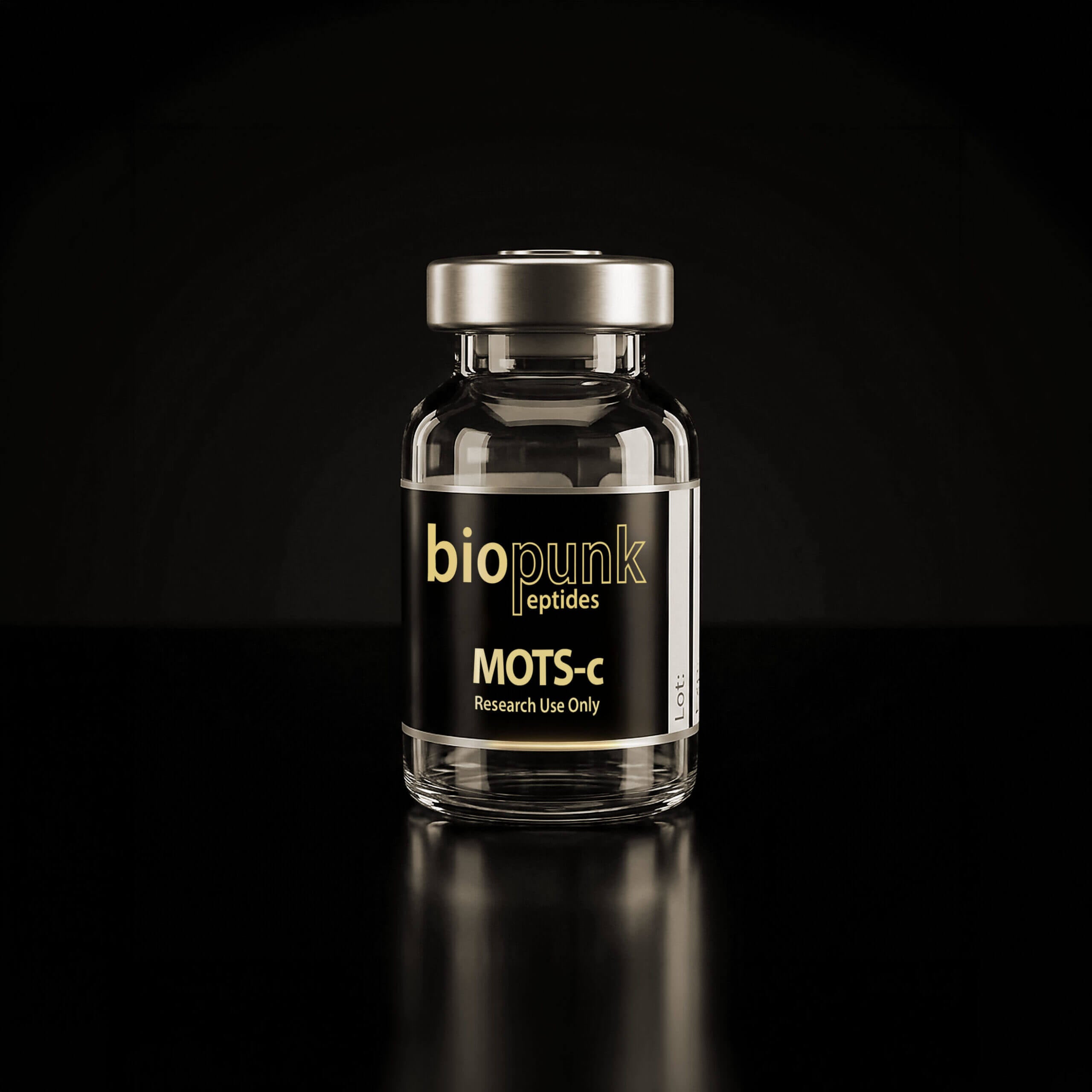
pep-MOT-40mg-us
CAS 1627580-64-6
MOTS-c is a 16-amino-acid microprotein encoded within mitochondrial DNA, first characterized by Lee et al. (Cell Metabolism, 2015; PMID 25738459) for its association with AMPK signaling and metabolic homeostasis in mouse research models. Later work documented its direct binding to CK2 in skeletal muscle signaling studies (Kumagai et al., iScience, 2024; PMID 39559755). Listed on FDA's Category 2 bulk substance list. For Research Use Only. Not for human consumption.
For laboratory research use only · Not for human or veterinary use.
Description
MOTS-c is a short open reading frame (sORF)-encoded microprotein, one of a small class of signaling peptides identified as products of mitochondrial DNA rather than the nuclear genome. The way a power plant sends status reports to the rest of a factory, MOTS-c is described in the literature as a candidate messenger relaying mitochondrial energy status to nuclear gene networks, a concept researchers term mitochondrial-nuclear communication. Laboratory investigation has centered on its interaction with AMPK signaling and casein kinase 2 (CK2).
Lee et al. (Cell Metabolism, 2015; PMID 25738459) first identified MOTS-c as a mitochondrial-derived peptide and documented its association with AMPK activation and metabolic homeostasis in mouse research models, including diet-induced and age-related obesity and insulin-resistance study designs. Kumagai et al. (iScience, 2024; PMID 39559755) identified CK2 as a direct binding target of MOTS-c in skeletal muscle signaling studies. A related study (American Journal of Physiology-Endocrinology and Metabolism, 2024; PMID 38170165) examined MOTS-c in an immobilization-induced skeletal muscle atrophy research model. MOTS-c is included on the FDA's Category 2 bulk drug substance list, cited for immunogenicity risk and the absence of human exposure data.
For Research Use Only. Not for human consumption.
Specifications
Shipping & Storage
Shipping
Orders ship within 24 hours. Delivered via USPS Priority or standard FedEx unless expedited shipping is selected at checkout. Tracking is emailed on dispatch and mirrored in your account.
In-transit handling
Lyophilized vials are shelf-stable and ship at ambient temperature. Storage in our warehouse is cooled; shipment does not require refrigeration.
Long-term storage
Lyophilized vials are shelf-stable at ambient temperature; refrigeration (2–8°C) extends shelf life. Refer to the batch-specific Certificate of Analysis for material-specific storage guidance. Once reconstituted, follow the storage instructions on the batch COA. Not for human or animal consumption.
Returns
Because these are research-grade biologics, we cannot accept returns on opened vials. Damaged-in-transit shipments are replaced at no cost within 7 days of delivery.
Frequently asked
Related