OVAGE
RUO
20mg
pep-OVA-20mg-us
Ovagen
$75.34Out of stock
Loading product…
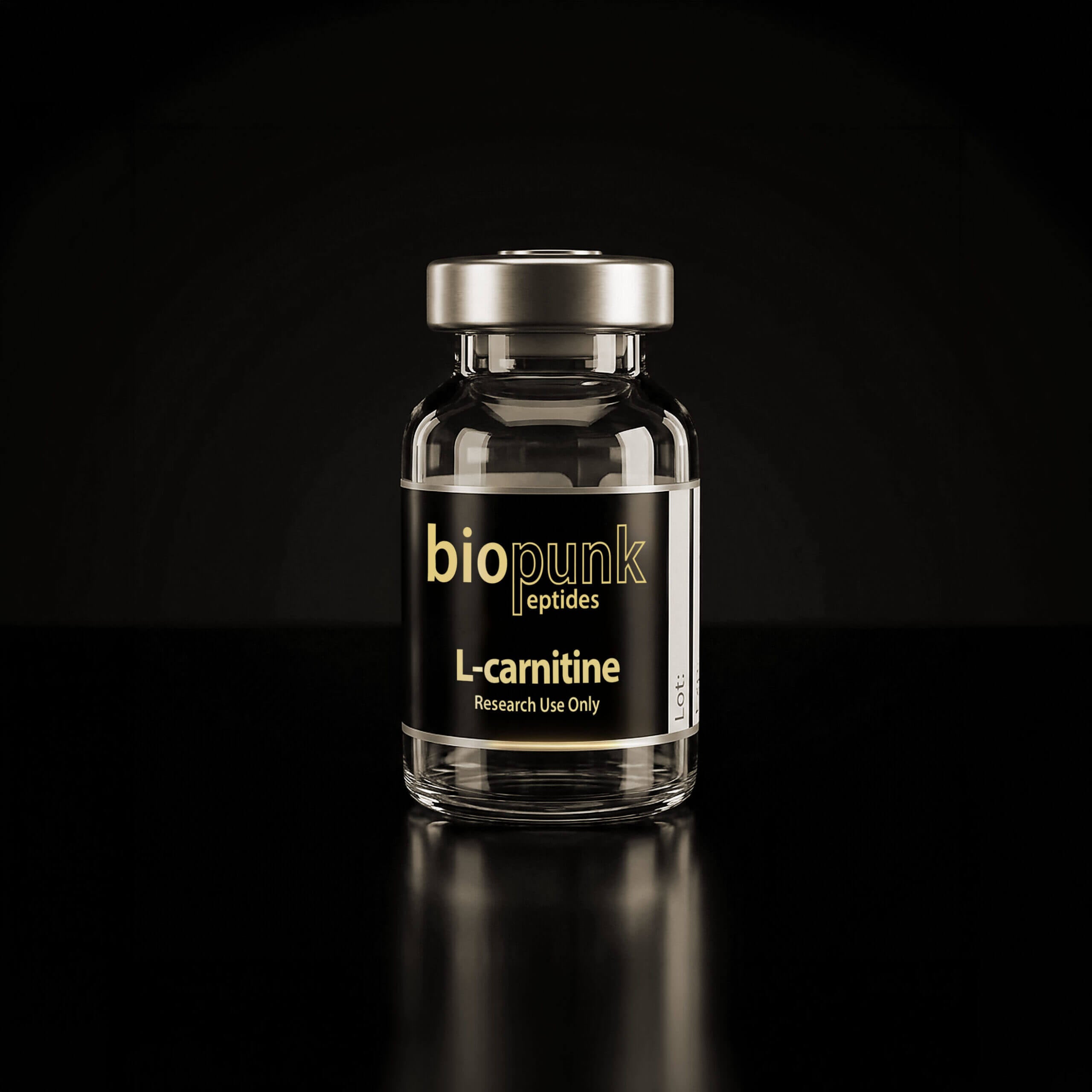
pep-LCA-2mg-us
CAS 541-15-1
L-carnitine is a water-soluble compound synthesized from lysine and methionine, documented in primary literature as a carrier of activated fatty acids across the inner mitochondrial membrane for oxidation (Bremer, Physiol Rev, 1983; PMID 6361812). Research-grade material, supplier-vetted supply. For Research Use Only. Not for human consumption.
For laboratory research use only · Not for human or veterinary use.
Description
L-carnitine is a water-soluble amino acid derivative synthesized endogenously from lysine and methionine precursors and obtained through diet. It has been documented in primary literature as a central component of the carnitine shuttle, the transport system that carries long-chain fatty acids across the inner mitochondrial membrane for oxidation. The way a shuttle bus carries commuters to a transit hub, carnitine is thought to ferry activated fatty acid chains to the mitochondrial matrix where oxidative metabolism takes place.
Bremer (Physiol Rev, 1983; PMID 6361812) established the foundational biochemistry of carnitine's function as a carrier of activated fatty acids and acetate across the inner mitochondrial membrane, characterizing the acyl-CoA:carnitine acyltransferase system. Steiber, Kerner, and Hoppel (Mol Aspects Med, 2004; PMID 15363636) reviewed carnitine's biosynthetic pathway and its role in long-chain fatty acid oxidation, along with its buffering effect on the mitochondrial acyl-CoA/CoA ratio. Wall et al. (J Physiol, 2011; PMID 21224234) documented that chronic oral L-carnitine and carbohydrate co-ingestion increased muscle total carnitine content in human volunteers and altered muscle fuel-selection patterns during graded cycling exercise.
For Research Use Only. Not for human consumption.
Specifications
Shipping & Storage
Shipping
Orders ship within 24 hours. Delivered via USPS Priority or standard FedEx unless expedited shipping is selected at checkout. Tracking is emailed on dispatch and mirrored in your account.
In-transit handling
Lyophilized vials are shelf-stable and ship at ambient temperature. Storage in our warehouse is cooled; shipment does not require refrigeration.
Long-term storage
Lyophilized vials are shelf-stable at ambient temperature; refrigeration (2–8°C) extends shelf life. Refer to the batch-specific Certificate of Analysis for material-specific storage guidance. Once reconstituted, follow the storage instructions on the batch COA. Not for human or animal consumption.
Returns
Because these are research-grade biologics, we cannot accept returns on opened vials. Damaged-in-transit shipments are replaced at no cost within 7 days of delivery.
Frequently asked
Related