OVAGE
RUO
20mg
pep-OVA-20mg-us
Ovagen
$75.34Out of stock
Loading product…
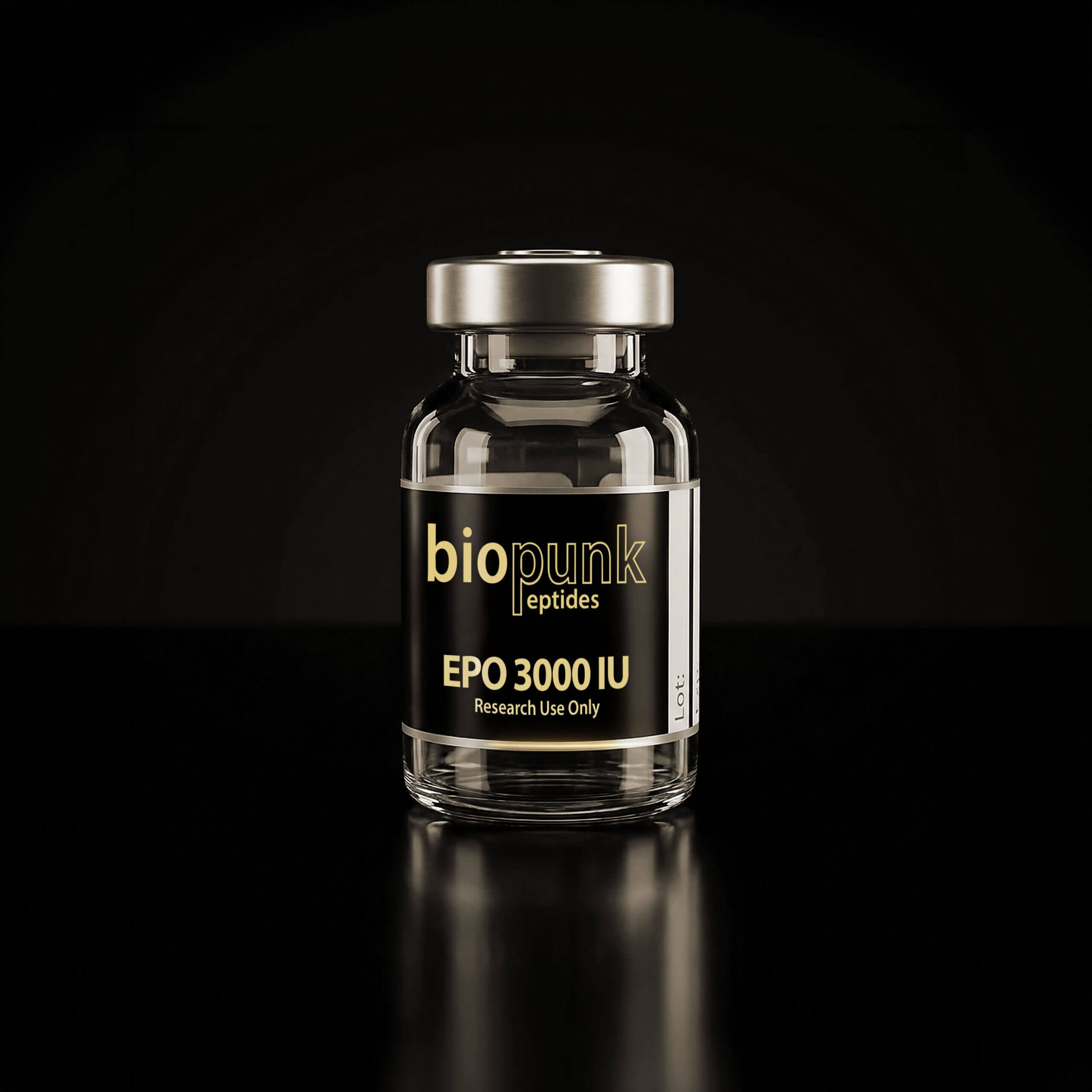
pep-EPO-3000iu-us
EPO (erythropoietin) is a glycoprotein hormone that engages its cognate receptor, EPOR, a class I cytokine receptor. Tóthová et al. (Int J Mol Sci 2021; PMID 34281163) reviewed how EPOR activation propagates through the JAK2/STAT5 pathway to influence gene transcription in erythroid progenitor cells. Sold research-grade, for laboratory use only. For Research Use Only. Not for human consumption.
For laboratory research use only · Not for human or veterinary use.
Description
EPO (erythropoietin) is a glycoprotein hormone that engages its cognate receptor, EPOR, a member of the class I cytokine receptor superfamily. Structural and signaling research has characterized how receptor engagement propagates through the JAK2/STAT5 pathway alongside PI3K/AKT and MAPK signaling branches within erythroid progenitor cells. The way a single key can open a specific lock across several connected doors, EPOR engagement is studied for triggering a cascade of intracellular signaling events across multiple downstream pathways.
Tóthová, Tomc, Debeljak, and Solár (Int J Mol Sci 2021; PMID 34281163) reviewed the role of STAT5 as a signaling node downstream of EPOR activation, mapping how tyrosine phosphorylation of the receptor propagates through STAT5 to influence gene transcription in erythroid progenitor cells. Tóthová, Šemeláková, Solárová, Tomc, Debeljak, and Solár (Int J Mol Sci 2021; PMID 34299300) examined the PI3K/AKT and MAPK signaling branches activated in parallel with JAK2/STAT5 following EPOR engagement. McGraw and List (Vitam Horm 2017; PMID 28629526) investigated the organization of EPOR within plasma membrane lipid rafts and its influence on receptor signal transduction in erythroid cell models.
For Research Use Only. Not for human consumption.
Specifications
Shipping & Storage
Shipping
Orders ship within 24 hours. Delivered via USPS Priority or standard FedEx unless expedited shipping is selected at checkout. Tracking is emailed on dispatch and mirrored in your account.
In-transit handling
Lyophilized vials are shelf-stable and ship at ambient temperature. Storage in our warehouse is cooled; shipment does not require refrigeration.
Long-term storage
Lyophilized vials are shelf-stable at ambient temperature; refrigeration (2–8°C) extends shelf life. Refer to the batch-specific Certificate of Analysis for material-specific storage guidance. Once reconstituted, follow the storage instructions on the batch COA. Not for human or animal consumption.
Returns
Because these are research-grade biologics, we cannot accept returns on opened vials. Damaged-in-transit shipments are replaced at no cost within 7 days of delivery.
Frequently asked
Related