OVAGE
RUO
20mg
pep-OVA-20mg-us
Ovagen
$75.34Out of stock
Loading product…
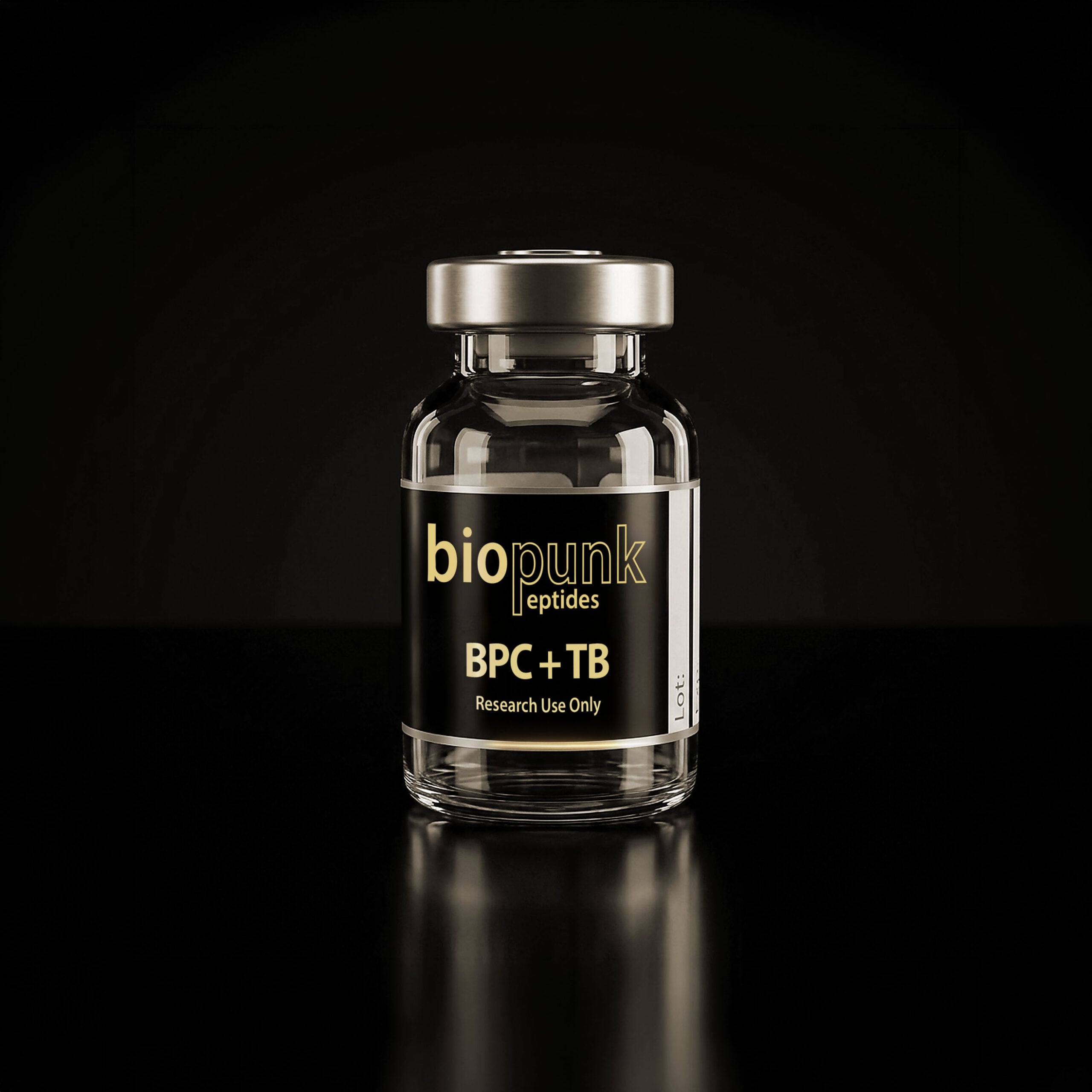
pep-BPC-2+TB5-2-4mg-us
CAS 137525-51-0 · 77591-33-4
This blend pairs BPC-157, a synthetic gastric pentadecapeptide, with TB-500 (Thymosin B4 Acetate), a synthetic fragment of thymosin beta-4. Sikiric et al. (2026, Pharmaceuticals) reviewed BPC-157's cytoprotection research in rodent models; Goldstein and Kleinman (2015, Expert Opinion on Biological Therapy) reviewed Tβ4's tissue research across animal models. For Research Use Only. Not for human consumption.
For laboratory research use only · Not for human or veterinary use.
Description
This blend combines BPC-157, a synthetic pentadecapeptide fragment based on a sequence identified in human gastric juice, with TB-500, a synthetic peptide corresponding to the N-terminal acetylated 17–23 fragment of thymosin beta-4 (Tβ4), a naturally occurring 43-amino-acid protein originally isolated from the thymus. Each peptide carries an independent, decades-long research literature; Biopunk sources them combined into a single vial for researchers studying the two compounds alongside one another.
On BPC-157: Sikiric et al. (2026, Pharmaceuticals) reviewed rodent research on BPC-157, documenting its examined relationship to endothelial integrity, microcirculation, and the nitric oxide system across hemorrhage and thrombosis models. Matek et al. (2026, Pharmaceuticals) reviewed preclinical rat studies of BPC-157 across tendon, ligament, and muscle injury models. Smoday et al. (2026, Pharmaceuticals) studied BPC-157 in a rat model of unilateral adrenalectomy, documenting changes in oxidative stress markers and NOS1-3/VEGF-A expression.
On TB-500 / thymosin beta-4: Goldstein and Kleinman (2015, Expert Opinion on Biological Therapy) reviewed the discovery and cellular pathways underlying Tβ4's documented activity across animal tissue research. Kleinman et al. (2023, International Immunopharmacology) reviewed Tβ4's examined relationship to fibrosis-associated pathways across multiple animal organ-fibrosis models, attributing much of the activity to its N-terminal fragment, Ac-SDKP. Renga et al. (2018, Expert Opinion on Biological Therapy) reviewed Tβ4's documented relationship to autophagy-linked inflammation pathways across various animal models.
Both component peptides appear on FDA's Category 2 bulk drug substance safety list, reflecting immunogenicity concerns and limited available human safety data.
For Research Use Only. Not for human consumption.
Specifications
Shipping & Storage
Shipping
Orders ship within 24 hours. Delivered via USPS Priority or standard FedEx unless expedited shipping is selected at checkout. Tracking is emailed on dispatch and mirrored in your account.
In-transit handling
Lyophilized vials are shelf-stable and ship at ambient temperature. Storage in our warehouse is cooled; shipment does not require refrigeration.
Long-term storage
Lyophilized vials are shelf-stable at ambient temperature; refrigeration (2–8°C) extends shelf life. Refer to the batch-specific Certificate of Analysis for material-specific storage guidance. Once reconstituted, follow the storage instructions on the batch COA. Not for human or animal consumption.
Returns
Because these are research-grade biologics, we cannot accept returns on opened vials. Damaged-in-transit shipments are replaced at no cost within 7 days of delivery.
Frequently asked
Related