OVAGE
RUO
20mg
pep-OVA-20mg-us
Ovagen
$75.34Out of stock
Loading product…
pep-AOD-2mg-us
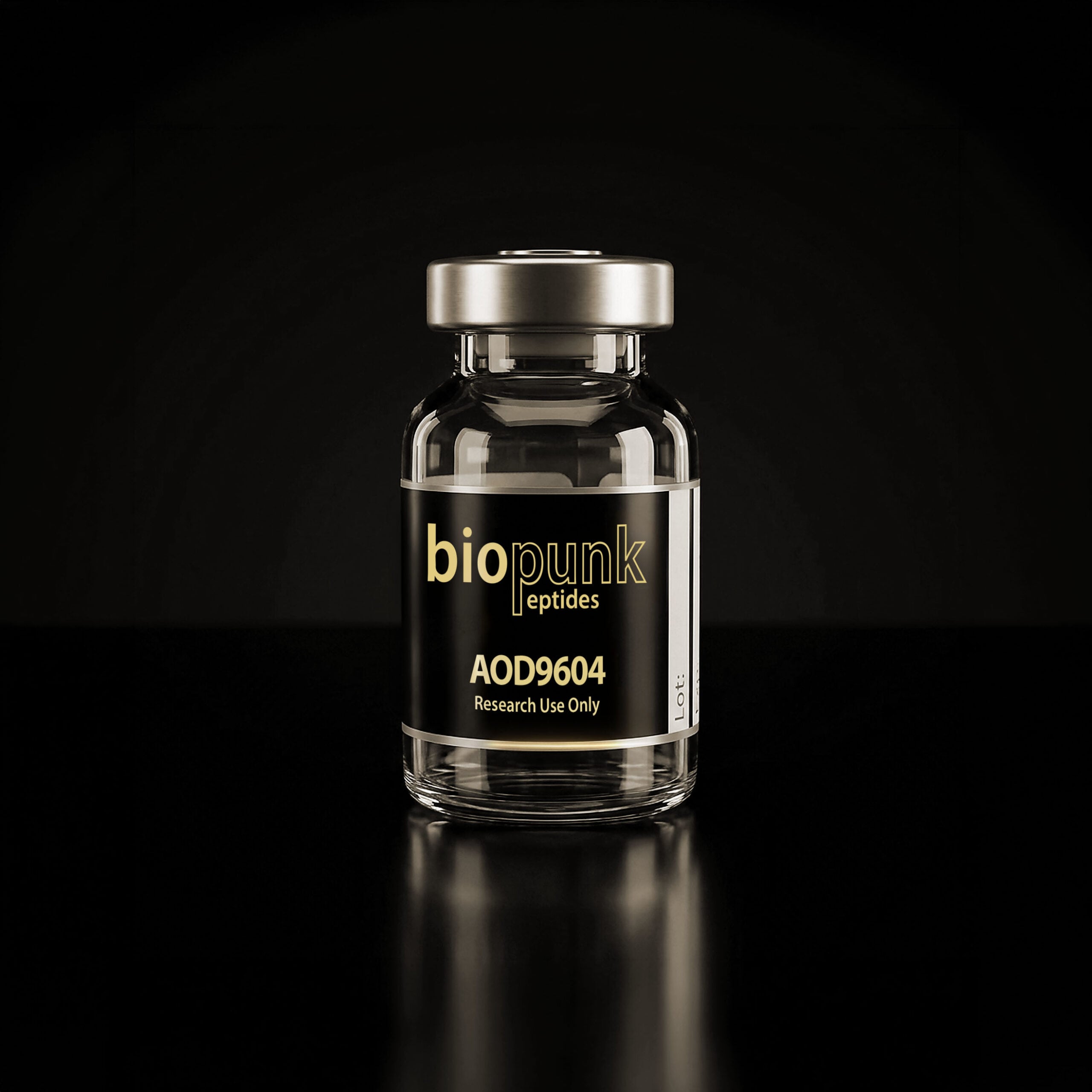
AOD9604 is a synthetic peptide fragment corresponding to the C-terminal, lipolytic region of human growth hormone. Ng et al. (2000, Hormone Research) documented reduced body weight gain and increased adipose lipolytic activity in obese Zucker rats given AOD9604, without the insulin-sensitivity effects observed with intact human growth hormone. Research-grade, lyophilized. For Research Use Only. Not for human consumption.
For laboratory research use only · Not for human or veterinary use.
Description
AOD9604 is a synthetic peptide corresponding to the C-terminal fragment of human growth hormone, encompassing the region associated with lipolytic activity in rodent research separate from the hormone's growth-promoting effects. Ng et al. (2000) documented reduced body weight gain and increased adipose lipolytic activity in obese Zucker rats given AOD9604, without the insulin-sensitivity changes observed with intact human growth hormone. Heffernan et al. (2001, International Journal of Obesity) examined AOD9604 in obese mice and reported increased fat oxidation alongside in vitro cell assays showing that AOD9604 does not compete for the human growth hormone receptor — a finding that positions the fragment's activity as operating independently of the parent hormone's canonical receptor. A companion study (Heffernan et al., 2001, Endocrinology) observed that chronic AOD9604 treatment raised beta-3 adrenergic receptor RNA expression in obese-mouse adipose tissue, while beta-3-AR knockout experiments indicated the lipolytic activity itself is not mediated directly through that receptor.
Ng FM et al. (2000, Hormone Research) — daily treatment with AOD9604 reduced body weight gain and increased adipose lipolytic activity in obese Zucker rats. Heffernan MA et al. (2001, International Journal of Obesity and Related Metabolic Disorders) — chronic treatment increased fat oxidation in obese mice; in vitro assays reported that AOD9604 does not compete for the human growth hormone receptor, indicating the fragment's lipolytic activity is receptor-independent of the parent hormone. Heffernan M et al. (2001, Endocrinology) — chronic treatment increased beta-3 adrenergic receptor RNA expression in obese-mouse adipose tissue; beta-3-AR knockout experiments showed the lipolytic action is not mediated directly through that receptor.
For Research Use Only. Not for human consumption.
Specifications
Shipping & Storage
Shipping
Orders ship within 24 hours. Delivered via USPS Priority or standard FedEx unless expedited shipping is selected at checkout. Tracking is emailed on dispatch and mirrored in your account.
In-transit handling
Lyophilized vials are shelf-stable and ship at ambient temperature. Storage in our warehouse is cooled; shipment does not require refrigeration.
Long-term storage
Lyophilized vials are shelf-stable at ambient temperature; refrigeration (2–8°C) extends shelf life. Refer to the batch-specific Certificate of Analysis for material-specific storage guidance. Once reconstituted, follow the storage instructions on the batch COA. Not for human or animal consumption.
Returns
Because these are research-grade biologics, we cannot accept returns on opened vials. Damaged-in-transit shipments are replaced at no cost within 7 days of delivery.
Frequently asked
Related